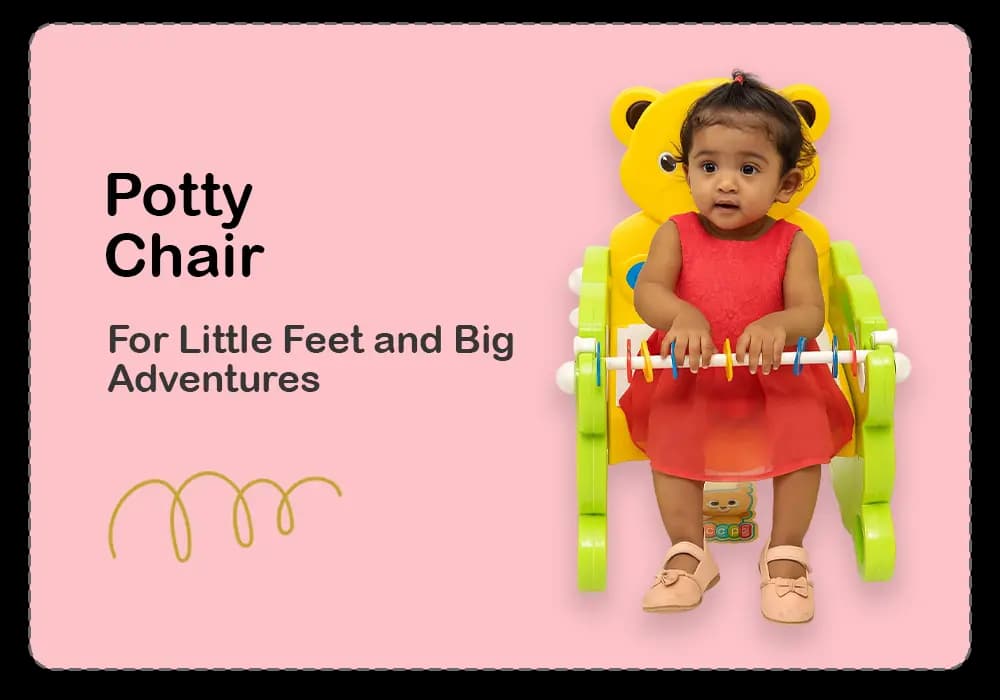
Every parent reaches this point eventually, usually somewhere around their child's second birthday: staring at a dozen different potty chairs for kids and wondering which one is actually right for your toddler. This guide walks you through everything worth knowing — how to pick the right one, when to start using it, and what actually makes the training process easier.
A potty chair is a small, child-sized seat that sits directly on the floor, letting a toddler use the toilet independently without needing to climb onto an adult-sized one. The child's feet stay flat on the ground the entire time, which makes it feel far less intimidating for a small child. Most potty chairs have a removable inner bowl, side handles for balance, and a wide, stable base.
An adult toilet is tall, the opening feels large and uncertain to a small child, and there's often a genuine fear of falling in. A potty chair removes all of that — the child sits low, their feet touch the ground, and the whole experience feels far more manageable.
There's no fixed age that works for every child, but there are signs to watch for: staying dry for two hours or longer, showing curiosity about the toilet, following simple two-step instructions, communicating the need to go, and disliking a wet or soiled diaper. Most toddlers show readiness somewhere between 18 months and 3 years old.
Resistance to sitting on it at all: let your child
choose their own potty chair design, or make it a shared activity.
Fear of flushing or the potty chair itself: keep the
chair separate from the adult toilet, at least initially.
Frequent accidents: this is normal, not a sign of
failure — stay calm and simply move on.
Start with a potty chair. It's lower to the ground, feels more secure, and doesn't require a step stool or extra balance. Once your child is confident and a bit bigger, a toilet seat adapter becomes a natural next step.
Young Wheels manufactures a range of potty chair designs in Delhi, from simple comfort-focused models like the Foam Potty to character options like the Teddy Potty Chair and Cow Potty that make reluctant toddlers more willing to sit still. Browse our full potty chair range, or if you're buying in bulk, see our wholesale potty seat manufacturer page. If you're not sure which one fits your child best, message us on WhatsApp and we'll point you in the right direction.
Most children show signs of readiness between 18 months and 3 years old, including staying dry longer, showing interest in the bathroom, and communicating their needs.
A potty chair is a standalone, floor-level seat where the child's feet touch the ground. A toilet seat adapter clips onto the regular toilet and needs a step stool. Potty chairs usually work better for younger, more nervous beginners.
Yes, as long as it has a wide, stable base and smooth, rounded edges. Always supervise your toddler while they're using it, especially in the early weeks.
If it has a removable inner bowl, lift it out, empty it, and wash with warm water and mild soap. Avoid harsh chemical cleaners, which can irritate a child's skin.
Try letting them choose the design themselves, or turn sitting time into a small shared activity, like reading a short book together, to reduce resistance without pressure.
It varies widely by child, ranging from a few weeks to several months. Consistency and patience matter far more than speed.